Thursday, May 30, 2013

New Teeth Specialists in Chicago Answer Your Questions about Oral Health and Hygiene, PART 4

Got questions about tooth whitening? Want to find out if you’re doing the best you can do to look after your teeth and gums? Your questions are all answered in this four-part FAQ guide to oral health and hygiene.

Welcome back to our four-part article series in which New Teeth specialists in Chicago answer all your frequently asked questions on oral health and hygiene. In our previous article post, we began addressing concerns that were more related to oral health problems, such as teeth replacement, cavities and why dental implants are considered to offer a better solution to missing teeth than conventional dental bridges. In this article, the final installment of the series, we’ll answer some of your final questions on oral health and hygiene maintenance.

It has been the aim of this FAQ guide to promote a greater understanding and appreciation for the importance of oral health to whole-body health.

Dental Implants in Chicago

FAQ: What’s the best way to get rid of bad breath?

Answer: Bad breath can be caused by one of three things and the way you approach treating it will depend on the underlying cause: (1) eating pungent foods such as garlic, onion and anchovy, (2) poor oral hygiene, which allows oral bacteria to flourish and (3) illness in another part of the body, especially the respiratory system.

If you absolutely need to avoid bad breath, then steer clear of pungent foods such as those mentioned above. Long-term good oral hygiene will ensure that your mouth is naturally healthy and your breath neutral. If you still struggle with halitosis, it may be possible that you have a respiratory infection or some other illness that is linked with bad breath. If your dentist can’t offer you solutions, your doctor very likely can.

Other habits to avoid if you want to keep your breath as sweet and pleasant as possible include smoking, excessive drinking and a diet that is high in sugar and starch.

FAQ: How long is it okay to wait before having a tooth replaced?

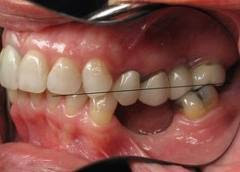
Answer: If you lose a tooth or have one accidentally knocked out, it is imperative that you seek immediate attention from a dental implants specialist in Chicago. You should not wait at all to have your mouth treated, because you leave yourself vulnerable to infection. Also, the longer you wait to have a tooth replaced, the more complex dental implant surgery becomes. The bone structure surrounding the root of the tooth becomes resorbed by the jaw, leaving less healthy bone to support an implant. For these reasons, implant dentists always urge patients to seek immediate attention in the event that one or more of their natural teeth are lost.

New Teeth Chicago

FAQ: Why do teeth go missing?

Answer: Teeth can go missing for a whole variety of reasons. The most common causes of tooth loss are tooth decay, periodontal (gum) disease and accidental trauma received to the face. Decay and disease are, in turn, caused by poor oral hygiene, habits such as smoking and heavy drinking, eating disorders, genetics, certain medications and illness (diabetes and cancer). Some of these factors cannot be avoided, but most of them can. Couple good oral hygiene with regular professional attention and cleanings and you should keep your pearly whites in excellent condition for life!

Wednesday, May 29, 2013

Chicago Cosmetic Dentist Dr. Atcha interviewed at Wellness Hour


Chicago Cosmetic Dentist Dr. Irfan Atcha interviewed by Randy Alvarez about new breakthroughs in dental implants and cosmetic dentistry.

Dr. Irfan Atcha
New Teeth Chicago

747 N. LaSalle St.
Chicago, IL 60654

Contact: 312-951-8338

Monday, May 27, 2013

Teeth in a Day Specialists in Chicago Answer Your Questions About Oral Health and Hygiene, PART 3

Got questions about tooth whitening? Want to find out if you’re doing the best you can do to look after your teeth and gums? Your questions are all answered in this four-part FAQ guide to oral health and hygiene.

Welcome back to our four-part article series in which Teeth in a Day specialists in Chicago answer all your frequently asked questions on oral health and hygiene. In our previous article post, we discussed the various habits to avoid when brushing your teeth, why flossing is so important and what the signs and symptoms of gingivitis, or early gum disease are. In this article, the third installment of the series, we’ll shift our focus to address more of your health-related questions.

Teeth In A Day Chicago

FAQ: How might I know if I have a cavity?

Answer: Unless you can actually see the little dark spot on your teeth, chances are you won’t know if you have a cavity. This is especially true if it’s only on the surface of your dental enamel. It’s only once the cavity deepens and reaches the pulp chamber that pain and sensitivity alert you to the fact that there’s something wrong. The best way to deal with cavities (and find out if you have one or more) is to go for regular scheduled appointments with the dentist.

FAQ: Is it really all that important to replace missing teeth if they don’t have much of an impact upon your appearance?

Answer: Yes, it is important! Many people feel that a missing tooth at the back of their mouth can be ignored because it doesn’t have much of an influence on their appearance. The importance of replacing missing teeth extends so much further than just a concern for aesthetics!

“Leaving a tooth without replacement with a sophisticated technology like dental implants leaves your mouth vulnerable to all sorts of problems,” explain All On Four dentures specialists in Chicago. “For one, the neighboring teeth become unstable and begin to shift to fill the gap left bare by the missing tooth. This instability then passes along the dental arch in a sort of domino effect.”

Leaving the tooth socket exposed also increases your risk of infection, since food and bacteria can readily become trapped in it. Also, it’s difficult to keep clean because it’s sensitive. Last but not least, the bone at the site of the missing tooth tends to become resorbed by the jaw, resulting in a loss of volume (see image below). This causes further problems for the neighboring teeth and can actually lead to further tooth loss!

All On Four Dentures Chicago - New Teeth Chicago

FAQ: Why are dental implants recommended over conventional dental bridges?

Answer: Dental implants last twice or even three times as long as conventional dental bridges, they feel far more natural and don’t require the two healthy adjacent teeth to be filed down for support. Implants are also stronger, easier to clean and tend to minimize the risk of further infection, as opposed to bridges, which are associated with an increased risk of tooth decay and tooth loss.

Stay Tuned for Part 4

To read the answers to more Frequently Asked Questions about oral health, hygiene and cosmetics, stay tuned for the final installment of this four-part article series, courtesy of All On Four Denture specialists in Chicago.

Monday, May 13, 2013

All On Four Implants Specialists in Chicago Answer Your Questions About Oral Health and Hygiene, PART 2

Got questions about tooth whitening? Want to find out if you’re doing the best you can do to look after your teeth and gums? Your questions are all answered in this four-part FAQ guide to oral health and hygiene.

Welcome back to our four-part article series in which All On Four implant dentists in Chicago answer all your frequently asked questions on oral health and hygiene. Last week, we kicked off with a look at proper brushing techniques as well as the importance of regular and thorough brushing. Let’s continue with where we left off...

FAQ: There’s good brushing technique, but is there anything I shouldn’t be doing with regards to my brushing technique?

All On Four Implants Chicago

Answer: Yes, pressing down too hard or using a toothbrush with very hard bristles could actually be damaging and irritating your gums and leading to the hastened erosion of your dental enamel. If your gums bleed when you brush, try not to push down too hard. Invest in a soft to medium bristled brush and if your current one looks more like a toilet brush than a toothbrush, it may be time to replace it. Also, try to store your toothbrush in a closed cupboard away from the toilet. Avoid those little storage containers that clasp around the head of the toothbrush: they hinder evaporation, which fosters an environment favorable for bacterial growth.

FAQ: Why is flossing so important? None of my friends do it.

Answer: If it’s your aspiration to have the same oral problems as your friends one day, then by all means follow in their footsteps. If, however, you wish to keep your teeth and gums in excellent condition, daily flossing is a must according to the Chicago implant dentist: the healthcare professionals who replace teeth that are lost as a result of sloppy oral hygiene habits! Brushing alone cannot remove 100% of the food debris and plaque, which is essentially oral bacteria, that naturally accumulates between your teeth during the course of the day. If you don’t floss, you allow this debris to sit and accumulate further. This causes gum irritation and inflammation, bad breath and eventually tooth decay and gum disease. Floss your teeth every day, preferably before you go to bed at night so that they truly are squeaky-clean.

FAQ: What’s the best type of floss to use?

Answer: As long as you floss daily and pay close attention to being thorough, it really doesn’t matter what type of floss you use (waxed, unwaxed, minted, unminted, etc.) It must be legitimate dental floss though... don’t think you can get away with using a toothpick, fingernail or bootlace.

FAQ: I think I may have gingivitis: what are the symptoms?

Chicago Implant Dentist

Answer: First of all, according to the U.S. Surgeon General, you’re not alone: a shocking 85% of Americans present with gum disease, the beginning stage of which is gingivitis. Common symptoms of this condition vary, but generally you may notice that:

  • Your gums are red and inflamed instead of pink,
  • They are swollen, forming angry “teardrops” of gum between the teeth,
  • You struggle with bad breath, which returns soon after brushing,
  • Your gums tend to bleed when you brush them.

If you have noticed any of the above symptoms, it’s imperative that you seek the attention of a qualified dental healthcare professional. Ignoring the early signs of gum disease allows it to progress to something that is far more expensive and requires more invasive procedures to fix. You’ll also risk permanent damage.

Stay Tuned for Part 3

To read the answers to more Frequently Asked Questions about oral health, hygiene and cosmetics, stay tuned for the third installment of this four-part article series, courtesy of Chicago implant dentists.

Monday, May 6, 2013

Dental Implant Specialists in Chicago Answer Your Questions about Oral Health and Hygiene, PART 1

Got questions about tooth whitening? Want to find out if you’re doing the best you can do to look after your teeth and gums? Your questions are all answered in this four-part FAQ guide to oral health and hygiene.

Every day, more and more research is published demonstrating the clear link between oral health and whole body health. You may think that neglecting your teeth doesn’t have extensive ramifications other than a bit of bad breath, but it does! For instance, gum disease - a direct result of this kind of negligent behavior - is closely linked with conditions such as diabetes, rheumatoid arthritis, osteoporosis, cardiovascular disease, respiratory disease, autoimmune disorders, stroke and even cancer! Makes you really think twice about ignoring your dentist’s six-monthly appointment requests, doesn’t it?

Dental Implant Chicago

The bad bacteria in your mouth - the ones that cause gum disease - have direct access to the vital organs in your body via swallowing and respiration. This is why it’s so important that we all care for our teeth properly. Yet, according to the U.S. Surgeon General, as many as 85% of Americans present with some form or stage of gum disease! It’s time we all understood and appreciated just how important good oral hygiene is to our quality of life, self-esteem and overall health.

In this four-part article series, specialists in dental implant in Chicago will be answering all of our questions about oral health, hygiene and what it takes to keep our teeth and ourselves in fantastic lifelong condition.

FAQ: Is it really so terrible that I only brush once a day?

Answer: “Your teeth, tongue, cheeks, gums and every other surface in your mouth are populated with legions of bacteria. Most of them are not harmful to your health at all, but many are linked with inflammation and disease,” explain Chicago dentists. “Brushing and flossing are the most important ways you can minimize the numbers of bacteria in your mouth, while preventing a build-up of their wastes, which can lead to gum inflammation, cavities, tooth decay and bad breath. Brushing only once a day simply isn’t good enough, the same way taking a shower once a week won’t prevent you from getting dirty and smelling like a dumpster.”

FAQ: What additional activities could I be doing to really look after my teeth?

Answer: To be an “oral achiever” all you need to do is brush your teeth at least twice a day and floss everyday, preferably before you go to bed at night. But, if you really want a gold star from your dentist, use an anti-bacterial mouth rinse that has been approved by the American Dental Association. Use it between meals and after snacks to help keep bacteria and plaque production to a minimum. You could also use a tongue scraper and go to your oral hygienist for regular professional cleanings.

FAQ: Is there a correct way to brush your teeth?

Same Day Dental Implants Chicago

Answer: “Absolutely! Hold your toothbrush at 45 degrees to the gum line and gently brush back-and-forth and up-and-down,” say the specialists of Same Day dental implants in Chicago. Brush every single tooth as well as right at the back of the tooth row, behind your second or third molars. Make sure you spend at least two minutes at a time and don’t forget to brush your tongue, palate and inner cheeks!

Stay Tuned for Part 2

To read the answers to more Frequently Asked Questions about oral health, hygiene and cosmetics, stay tuned for the second installment of this four-part article series.

Wednesday, April 24, 2013

The Implant Dentist in Chicago Talks to Us About: Top 11 Toothbrushing Mistakes, PART 4

This four-part article series takes a closer look at the 11 toothbrushing mistakes people frequently and unwittingly make when caring for their pearly whites.

Welcome to the final installment of this four-part article series on the top 11 toothbrushing mistakes we should all do our very best to avoid. So far, the implant dentist in Chicago has explained the following 9 points:

Mistake # 1: Not using the correct toothbrush.
Mistake # 2: Thinking that an electric toothbrush will do all the work for you.
Mistake # 3: Not brushing correctly.
Mistake # 4: Not choosing the right bristles.
Mistake # 5: Not brushing long enough or often enough.
Mistake # 6: Brushing too hard and/or too often.
Mistake # 7: Using the same starting point every time.
Mistake # 8: Only brushing the front tooth surfaces.
Mistake # 9: Not rinsing your toothbrush afterwards.

Let’s now take a look at the two final tooth brushing mistakes...

Chicago Dental Health: Tooth brushing Mistake # 10

Not Letting Your Toothbrush Dry between Brushes

Implant Dentist Chicago

“Bacteria thrive in moist environments, so if your toothbrush doesn’t air and dry properly in between uses, it’s probably acting as a nesting ground for these micro-organisms,” explains the implant dentist in Chicago.

Here are some recommendations for toothpaste storage:

  • Place your toothbrush upright in a glass so that it’s not lying in a pool of water next to the sink.
  • Avoid using those airtight toothpaste caps, because they prevent moisture from evaporating off the bristles.
  • Store your toothbrush in a closed medicine cabinet so that water vapor from the flushing toilet won’t settle on it.

“Moisture doesn’t only encourage bacterial growth; it can also miss-shape toothbrush bristles, which results in a less than satisfactory cleaning ability.”

Chicago Dental Health: Toothbrushing Mistake # 11

Not Changing Your Toothbrush Frequently Enough

Chicago Implant Dentist

When last did you buy yourself a new toothbrush? According to Chicago dental healthcare experts, you should be replacing your toothbrush every three or four months or as soon as it starts looking frayed. You’re not very well going to keep a diary of when you change your toothbrush so a better rule of thumb is to hit the shops as soon as the bristles lose their usual flexibility and begin to break apart.

“In order to do the best possible job of cleaning your teeth, your toothbrush’s bristles should be straight and emerge at a 90° angle. A frayed toothbrush is ineffectual, so if yours has become so, it’s time to buy a new one!”

A Final Note

Brushing your teeth is a crucial component of the home oral hygiene routine that will keep your teeth in beautiful lifelong condition. While this habit tends to become second nature to us all, you should never just fly on auto-pilot while doing it. The next time you brush your teeth, pay attention to what you do and where you could improve your brushing technique. Take a closer look at your toothbrush - is it time to buy a new one? Could you be storing it better? Do you brush frequently enough? Try timing yourself to see just how long you normally brush your teeth for.

Follow the advice provided in this four-part article series by the Chicago implant dentist and you will surely reap the rewards!

Thursday, April 18, 2013

Dental Implants Specialists in Chicago Talk to Us About: Top 11 Toothbrushing Mistakes, PART 3

This four-part article series takes a closer look at the 11 toothbrushing mistakes people frequently and unwittingly make when caring for their pearly whites.

Welcome to this, the third installment of our four-part article series on the top 11 toothbrushing mistakes Chicago residents commonly make. So far, we’ve looked at the first five points. We’re halfway through, so without further ado, let’s look at habits # 6, 7 and 8.

Chicago Dental Health: Toothbrushing Mistake # 6

Not Brushing Correctly

Dental Implants Chicago

“When it comes to preventing tooth decay and the various oral diseases that lead to tooth loss, your tooth brushing technique is more important than any other factor,” say dental implant specialists in Chicago. “Questions of toothbrush brand, bristles and manual versus electric are of secondary importance. If you use your toothbrush correctly, little else matters really.”

Here are some rules for correct toothbrush usage:

  • Align your toothbrush at 45° to the gum line,
  • Do short, circular strokes,
  • Brush softly; not hard and vigorously,
  • Brush both the outer and inner tooth surfaces,
  • Brush your tongue, too!

Contrary to how most of us brush our teeth, you shouldn’t actually use horizontal strokes across the tooth crowns. According to Chicago dental hygienists, you should either brush up and down or use circular motions.

Chicago Dental Health: Toothbrushing Mistake # 7

Using the Same Starting Point Every Time

“People tend to brush certain quadrants in the mouth more thoroughly than they do others. The back teeth definitely don’t receive the same amount of attention the front teeth do and this explains why the molars tend to succumb to dental decay first,” explain dental implants experts in Chicago. “When you brush your teeth, start in a different place every time and make sure you dedicate the same amount of effort to keeping every tooth clean.”

The rationale behind starting in a different place every time is that you don’t rush any one particular quadrant of the mouth. People tend to become bored after a while and finish up quickly. If you always start in one place and finish in another, a section of your mouth is not going to receive as much attention as the others. To remedy this, begin brushing at a different point every time.

Chicago Dental Health: Toothbrushing Mistake # 8

Only Brushing the Front Tooth Surfaces

Chicago Dental

“It’s not only the front surfaces of the teeth that need a good scrubbing two to three times a day; it’s also the back surfaces! Every facet of every tooth in your mouth harbors bacteria, so every facet of every tooth in your mouth requires cleaning,” emphasize Chicago dental healthcare professionals. “Whether you can see it or feel it or not, plaque accumulates on every surface of your teeth and tongue, which is why you must be thorough in your brushing routine.”

Chicago Dental Health: Toothbrushing Mistake # 9

Not Rinsing Your Toothbrush Afterwards

If you don’t rinse your toothbrush after using it, bacteria and food debris remain trapped within its bristles. The next time you use it, you’re putting all that bacteria back in your mouth. Always rinse your toothbrush thoroughly after you’ve used it. This will help flush out bacteria, food debris and leftover toothpaste.

Stay Tuned for Part 4

To read about the final toothbrushing mistakes we have on our list and what dental implants Chicago specialists have to say about them, stay tuned for the final installment of our four-part article series.