Showing posts with label All On Four Dentures Chicago. Show all posts

Thursday, July 10, 2014

How much does it cost to get dental implants in Chicago?


Determining the cost of dental implants in Chicago
A tooth implant is a titanium cylinder that is inserted into the jawbone to support an artificial tooth. The cost of this advanced and highly effective restorative teeth procedure depends on several factors. If you are planning to get the Dental Implants in Chicago to end your dental woes for ever, find out how much you would need to pay to enjoy permanent, non-removable, and comfortable set of artificial teeth. 

The number of missing teeth that needs to be replaced -The cost of replacing a single missing teeth is usually between $1000 and $3000. For replacing two or more teeth, you may need to incur an expense of $5000 to $25,000. The more the number of teeth that needs to be replaced, the more would be the cost of the dental implants. 

The number of implants that are required- The more the number of implants required to support the artificial teeth, the higher would be the overall cost of the implant procedure. For this reason, all on 4 implants treatment costs less than the traditional implants procedure as it uses only 4 implants to support several artificial teeth. 

The type of implant that one opts for-the cost of mini implants is less than the standard implants. Mini implants are around 2 mm in diameter and are usually used to support very small individual teeth. Sometimes they are combined in a group and are used for supporting a removable denture. These cost between $300 and $900 per fixture.


Standard implants on the other hand are between 3-6 mm in diameter. They can be used to support several teeth and accept a variety of abutments. They cost between $1800 and $2500 per fixture.

The quality and quantity of bone in the jaw- Tooth implants in Chicago need adequate amount of bone for allowing proper fusion of the titanium cylinder and the bone. If there is not enough bone in the area where the implant is needed, one needs to undergo the process of bone grafting. Bone grafting improves the width and height of the bone and allows for successful integration of the implant with the jawbone. However, it does add to the overall cost of the dental implant procedure. 

Are dental implants worth it?
Most people wonder if it is really worth spending so much on the dental implants. But if you are having problems with your poor fitting dentures or you wish to improve your speech, eating, physical appearance, and your confidence and self-esteem, dental implants are definitely worth it. When performed by a qualified and experienced implant dentist in Chicago, implants last for almost 30-40 years, promising significant return on the investment. 

Do some research on dental implants cost and talk to your Implant Dentist Chicago if they have any special payment procedures and discounts. Get a winning smile and enhanced confidence with a dental implant procedure. 


Thursday, November 7, 2013

Removable Dentures are a Thing Of The Past With a Visit to The Implant Dentist in Chicago

This article explains the various aspects pertaining to All-On-Four dental implants, highlighting why it is an extremely beneficial treatment for edentulous patients.


For edentulous or near edentulous patients, it is often thought that traditional removable dentures are their only option when it comes to tooth replacement procedures. Although dental implants sound like a brilliant solution, aren’t there just too many teeth to be replaced for this to be a viable option? Wrong! With innovative and exciting advances in dental technology, dental implants are possibly the best option for replacing a full set of teeth.

With a few visits to your implant dentist in Chicago, all your woes associated with dentures, (such as unnatural looking teeth, sore gums, a limited diet, and loose teeth, etc.) will be a distant memory while you flash your new, beautiful, pearly white grin. 


Does The Dentist Place an Implant for Every Tooth?


Implant Dentist Chicago
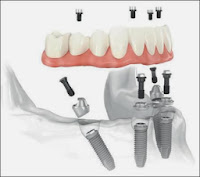
No, and this is why dental implants are now a viable option for edentulous and near edentulous patients. “The All-On-Four is a procedure that allows for patients to receive a full set of new teeth with just four implants placed in the mouth,” says the All-On-Four denture specialist in Chicago. 

The implant dentist places four implants into the mouth, to which a custom made denture bridge is permanently fixed. Not only does this eliminate all the hassles associated with traditional dentures, but it also does not typically require any bone grafting procedures, making this a surprisingly quick and minimally invasive process.  

But How Exactly Are They Different to Traditional Dentures?


Beside the fact that they are permanently fixed in your mouth, attaching a bridge to the implants means that a patient’s replacement teeth do not place pressure on the gums or cover the palate with a bulky piece of plastic.

According to an implant dentist in Chicago, traditional removable dentures cause pressure to build up against your gums, often leading to sore and inflamed gums that require you to use anesthetic gels. To add to this, your palate is covered by a piece of plastic, which can make you gag and prevent you from experiencing your food properly.

With All-On-Four dental implants, your palate is no longer covered and there is no pressure on your gums, allowing your mouth to feel completely natural.

Is the Procedure Painful?


All On Four Dentures Chicago The procedure is typically performed with the patient comfortably sedated, allowing them to rest easy while the dentist works his or her magic. During the healing process it is possible for patients to experience small amounts of pain and discomfort, but this can be managed with mild pain medications that will be prescribed to you by your implant dentist in Chicago.

But Isn’t This A lot More Expensive That Removable Dentures?


Initially dental implants do cost more, but in the long run Chicago residents will find that the All-On-Four technique ends up being a lot more cost effective. Removable dentures typically need to be refitted every few years due to atrophy of the jawbone. All-On-Four dental implants are a permanent fixture that, with proper care and good oral hygiene, can last several decades without requiring replacement.

So with that, it is easy to see how dental implants are indeed a better, possibly even the best, solution for edentulous and near edentulous patients.

Thursday, July 11, 2013

What Chicago Dental Implant Specialists Have To Say About Gum Disease

In this article we take a look at the two forms of gum disease: gingivitis and periodontitis. We offer a list of signs and symptoms that may be present when this condition occurs and what you can do to prevent the development of gum disease.

The leading cause of tooth loss in the United States is gum (periodontal) disease. Millions of Americans suffer from some form of gum disease and if left untreated, you run the risk of developing a great deal of health issues, both oral and general. Chicago dental implant experts explain that the keys to healthy teeth are healthy gums and a sound oral healthcare regime. Your gums protect the base of your teeth, where connective tissue secures them to the supporting jaw bone. In this article, we will look at the two types of gum disease - gingivitis and periodontitis - as well as explain what can be done to prevent or treat gum disease.

Gum Disease: Gingivitis and Periodontitis

All On Four Dentures Chicago

The initial form of gum disease is gingivitis, and this occurs when bacteria develop and collect in pockets at the gum line, causing irritation and inflammation. The most common symptoms related to gingivitis are red and inflamed gums, bleeding when brushing your teeth and persistent bad breath (halitosis). If you leave gingivitis untreated, the inflammation and can invade your connective tissue and even bone, leading to infection and the development of periodontitis; the most severe from of gum disease.

Gum Disease: Symptoms of Periodontitis

Periodontitis is typically quite uncomfortable and causes a host of undesirable symptoms. Leaving this condition untreated will cause you to lose your teeth and puts the rest of your body at risk of other health problems, including heart disease, respiratory disease and stroke. Some of the symptoms of periodontitis include:

  • Receding gums
  • Inflammation and discomfort along the gum line
  • Red, swollen and bleeding gums
  • Tenderness of the gums
  • Persistent and lasting sensitivity to temperatures (hot and cold)
  • Tooth discoloration
  • Painful oral abscesses
  • Persistent bad breath and an unpleasant taste in the mouth

Gum Disease: Prevention

Chicago Dental Implant

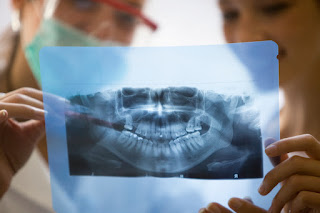
It is unfortunate that most people only notice the symptoms of periodontitis when it is too late to totally reverse the damage. This is why All-On-Four dentures specialists in Chicago recommend going for a general dental check-up at least twice a year. Your dentist will give you a thorough oral examination and spot warning signs early enough to treat and indeed reverse any damage that may have already been caused. With the help of the incredible modern technology available today in the form of dental X-rays and CAT scans, your dentist should be able to give your mouth a comprehensive check-up and ensure that your oral health remains in excellent condition.

The Importance of Early Detection

As we mentioned before, catching gum disease in its early stages is vital not only for your oral health but also for your general health. You can do a lot from home to ensure you keep your teeth and gums in excellent condition. A leading cause of gum disease is simply a lack of a good oral hygiene routine and lifestyle choices such as excessive alcohol intake and smoking.

Chicago dental implant specialists urge that you remember to brush, floss, scrape your tongue and rinse daily as this can go a long way in preventing gingivitis and other oral ailments. Go see your dentist at least twice a year and ask him/her about what further measures you can take to prevent from developing gum disease and how to maintain proper oral health.

Wednesday, June 19, 2013

All On Four Dentures Specialists in Chicago: Habits to Adopt and Habits to Avoid

In this article we look at plaque, how it is formed and why it is a danger to your oral health. Furthermore we consider the good and bad habits related to fighting plaque.

Most of us are very much aware of the fact that plaque is no friend to your teeth. From the advertisements and the packaging on your toothpaste tube to advice from your dentist: we all know that fighting plaque is an essential part of keeping your pearly whites in good condition. In this article, we will be looking at a few habits you should definitely avoid in order to fight the good fight.

A dentist who specializes in All-on-Four Dentures in Chicago informs us that plaque build-up gradually hardens, forming tartar or calculus on your teeth. Once this has taken place, only a professional cleaning at a dentist can get rid of it. Why is this build-up bad? Quite simply put... it causes gum disease, which leads to tooth-loss among other oral ailments.

All On Four Dentures Chicago

Habits That Helps the Fight against Plaque Build-Up

  • Have you brushed your teeth? Not brushing regularly is a sure way to allow plaque to build up. You need to brush your teeth at least twice a day, every day! Maintaining a good standard of oral hygiene is essential in protecting your teeth from plaque and decay.

  • It’s all about the floss: Your mouth is filled with pockets, nooks and crannies that are hard to reach by brushing alone; flossing gets into those tiny spaces and removes food debris and plaque at the gum line. Plaque below the gum line can lead to serious oral inflictions such as periodontal (gum) disease.

  • Rinse: Antibacterial rinses help reduce plaque and the risk of gingivitis, not to mention leaving your mouth feeling fresh and healthy. Opting for a fluoride rinse has proven to prevent decay and should be a consistent addition to your brushing and flossing daily oral hygiene routine.

  • Visit your local dentist: Dentists are not nearly as scary as the variety of oral ailments you could be harboring by avoiding your next check-up! The proof is in the scientific studies, which show that people who neglect to go for regular check-ups are far more prone to cavities and tooth loss. You should go to your dentist at least twice per year.

  • Nature’s way: Many properties found in natural, healthy fruits and vegetables are nature’s way of helping your body in the fight against plaque. Crunchy fruits and vegetables literally scrub your teeth, while providing essential vitamins and minerals, strengthening and protecting your dental enamel.

Implant Dentist Chicago

  • Restrain your sweet tooth: Bacteria thrive on high-sugar foods and produce acidic wastes, which ruin your teeth. All high-sugar foods and drinks contribute to plaque formation and build-up. Try to lessen your sugar intake as much as possible.

A Final Few Words

An implant dentist in Chicago informs us that keeping your teeth free from plaque is not a difficult task, but consistency in your daily oral habits and diet choices will be the most important step in ensuring that your teeth are healthy and as plaque-free as possible. You can start fighting plaque from home by following the simple advice above, and by visiting your dentist regularly you can ensure that your pearly whites remain healthy, happy and beautiful!

Tuesday, June 11, 2013

All On Four Dentures Specialists in Chicago Provide Advice on Bad Dental Habits

In this article, we will be looking at five bad dental habits, including excessive brushing, chewing on objects and nail biting. Additionally, we explain why these habits are bad for your teeth and for your overall oral health.

Maintaining a good oral hygiene routine is an essential part of taking care of your teeth, and your teeth mean much more to you than you might appreciate on a daily basis. In addition to having a beautiful smile, which goes hand in hand with a good level of confidence, maintaining strong and healthy teeth is a vitally important aspect of your overall general health. Unfortunately, many people entertain habits that are terrible for your teeth and before they know it, they require the help of a dental expert for complex and invasive surgery to fix the damage done. All-on-Four dentures specialists in Chicago give some advice about the bad dental habits to avoid!

Bad Habit # 1: Teeth Tool Work

All On Four Dentures Chicago

Using your teeth as a multi-purpose tool is definitely not a kosher dental habit. However, this is something you might encounter every day! People use their teeth to open all sorts of things from bottles to chip bags. This is not the function intended for your teeth and can cause soft and hard tissue trauma in your mouth, such as chipping or even breaking your teeth. Using your teeth as tools can also cause poor jaw alignment, an uneven bite and the hastened wearing down of your teeth. Rather, take the time to find the right tool for the right reason.

Bad Habit # 2: Ice, Ice Baby... Don’t Do It!

You’ve definitely either done this or seen it done: some people habitually chew on ice. A Chicago dental implant specialist informs that the icy temperature and solid texture of ice can cause your teeth to fracture. You could also accidently crack off part of the enamel on a tooth or filling, and this in turn could potentially get you in the dentist’s chair for a root canal.

Bad Habit #3: Nail Biting Stuff

Chicago Dental Implant - New Teeth Chicago

This one is a double whammy: not only is nail biting bad for your nails but it is also very bad for your teeth. Aside from the fact that it can lead to chipped or broken teeth, your nails are carriers for germs and bacteria that can make an easy transition into your mouth and cause gum infections or cavities.

Bad Habit # 4: The Daily Grind

Chronic grinding of your teeth, a condition medically referred to as bruxism, can cause a host of dental problems, such as chipping, fracturing, loosening of teeth and even tooth loss. It can also lead to other ailments, including as severe toothache, headaches and sore jaw joints. This condition commonly occurs while one is asleep; however a simple solution is to obtain a mouth guard to protect your teeth.

Bad Habit # 5: I’ll have a Glass of Red

We’ve probably all seen a mouth stained with red wine: the lips, the tongue and the teeth bathed in an unflattering red shade. However, red wine is actually better for your teeth than white wine. White wine has a higher acidity content and thus causes more permanent problems to your teeth. This acidity wears away at tooth enamel leaving your teeth vulnerable to other stains. To protect your teeth, rinse your mouth with water after you drink and follow a good oral hygiene routine.

Finally...

This article has informed you of the things you should not do, but as with so much in life, the things you should do are as important as the ones you shouldn’t. So do yourself a favor: look after your teeth, brush, floss and rinse daily and go to your local dentist for regular check-ups!

Wednesday, May 29, 2013

Chicago Cosmetic Dentist Dr. Atcha interviewed at Wellness Hour


Chicago Cosmetic Dentist Dr. Irfan Atcha interviewed by Randy Alvarez about new breakthroughs in dental implants and cosmetic dentistry.

Dr. Irfan Atcha
New Teeth Chicago

747 N. LaSalle St.
Chicago, IL 60654

Contact: 312-951-8338

Monday, May 27, 2013

Teeth in a Day Specialists in Chicago Answer Your Questions About Oral Health and Hygiene, PART 3

Got questions about tooth whitening? Want to find out if you’re doing the best you can do to look after your teeth and gums? Your questions are all answered in this four-part FAQ guide to oral health and hygiene.

Welcome back to our four-part article series in which Teeth in a Day specialists in Chicago answer all your frequently asked questions on oral health and hygiene. In our previous article post, we discussed the various habits to avoid when brushing your teeth, why flossing is so important and what the signs and symptoms of gingivitis, or early gum disease are. In this article, the third installment of the series, we’ll shift our focus to address more of your health-related questions.

Teeth In A Day Chicago

FAQ: How might I know if I have a cavity?

Answer: Unless you can actually see the little dark spot on your teeth, chances are you won’t know if you have a cavity. This is especially true if it’s only on the surface of your dental enamel. It’s only once the cavity deepens and reaches the pulp chamber that pain and sensitivity alert you to the fact that there’s something wrong. The best way to deal with cavities (and find out if you have one or more) is to go for regular scheduled appointments with the dentist.

FAQ: Is it really all that important to replace missing teeth if they don’t have much of an impact upon your appearance?

Answer: Yes, it is important! Many people feel that a missing tooth at the back of their mouth can be ignored because it doesn’t have much of an influence on their appearance. The importance of replacing missing teeth extends so much further than just a concern for aesthetics!

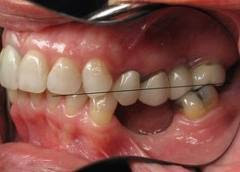
“Leaving a tooth without replacement with a sophisticated technology like dental implants leaves your mouth vulnerable to all sorts of problems,” explain All On Four dentures specialists in Chicago. “For one, the neighboring teeth become unstable and begin to shift to fill the gap left bare by the missing tooth. This instability then passes along the dental arch in a sort of domino effect.”

Leaving the tooth socket exposed also increases your risk of infection, since food and bacteria can readily become trapped in it. Also, it’s difficult to keep clean because it’s sensitive. Last but not least, the bone at the site of the missing tooth tends to become resorbed by the jaw, resulting in a loss of volume (see image below). This causes further problems for the neighboring teeth and can actually lead to further tooth loss!

All On Four Dentures Chicago - New Teeth Chicago

FAQ: Why are dental implants recommended over conventional dental bridges?

Answer: Dental implants last twice or even three times as long as conventional dental bridges, they feel far more natural and don’t require the two healthy adjacent teeth to be filed down for support. Implants are also stronger, easier to clean and tend to minimize the risk of further infection, as opposed to bridges, which are associated with an increased risk of tooth decay and tooth loss.

Stay Tuned for Part 4

To read the answers to more Frequently Asked Questions about oral health, hygiene and cosmetics, stay tuned for the final installment of this four-part article series, courtesy of All On Four Denture specialists in Chicago.