Showing posts with label New teeth Chicago. Show all posts
Showing posts with label New teeth Chicago. Show all posts
Wednesday, March 19, 2014

Thursday, December 12, 2013
New Teeth Chicago: Five Things You Can Do To Get The Most Out Of Your Dental Appointments, PART 2
This three-part article series explains five important things you can do to get the very most out of your bi-annual appointments with the dentist and oral hygienist.
Welcome to the second installment of this three-part article series on how to get the most out of your bi-annual appointment with your dentist. In Part 1, we spoke to a tooth implants specialist in Chicago, who recommended that patients compile a list of problems, complaints and questions they may have, prior to their dental appointment. Whether you’ve noticed that your gums bleed easily when brushed, a particular tooth feels really sensitive or you find yourself struggling to floss... write it down and ask your dentist to take a look for you. You live with your teeth everyday, whereas your dentist only spends an hour with them once or twice a year, so diagnosis has to be a two-way street!
2. Make Sure You Update Your Medical History!
 The receptionist at your Chicago dental office usually keeps a detailed medical history of every patient they have on file. This is usually reviewed by the dentist and oral hygienist when you go in for an appointment, so that any treatment or medication they recommend to you won’t come into conflict with any medical condition or medication you might have, or are already taking respectively. This is why it’s so important that you keep your medical history contemporary. “The next time you see your dentist, speak to the receptionist about updating your medical history,” recommends a new teeth specialist in Chicago. “This will help your dentist stay right up-to-date on your general health, which, believe it or not, plays a fundamental role in dental health.”
For example, diabetes shares a known link with gum disease. Certain medicines can cause “dry mouth”, which can put you at a higher risk of developing cavities and tooth decay, since your saliva is your body’s natural defense against bacteria. Essentially, the more your Chicago dental healthcare practitioner knows about your general health as a whole, the better they will be able to care for your oral health.
3. Provide Your Dentist With a List Of All The Medicines You May Be Taking... Vitamins and Supplements Included
 “Several different medications have an impact upon oral health,” explains a new teeth specialist in Chicago. “We see this all the time. Patients who are on high blood pressure tablets or anti-depression pills tend to suffer from dry mouth, which leaves the teeth more vulnerable to decay and cavities. Gum problems are also common amongst patients on these kinds of medications. This is why we like patients to tell us about any chronic medications they might be on, so that we can offset the side effects to the best of our abilities. We’ll also educate patients in how to better care for their teeth, considering the impact of any medicines or supplements they may be taking.”
“We want to know about everything, even if you’re on Vitamin B supplements. Certain health pills can thin the blood, which can become a challenge when a patient comes in for dental work. Should any incisions be required, bleeding can be a problem. Talk to us... we don’t care how embarrassing you think any medications might be. Nothing can shock us. We’ve heard it all,” says the tooth implants specialist in Chicago. Please feel comfortable considering your practioner your trusted dental tour guide!
Stay Tuned for Part 3
To find out how else you can get the most out of you annual or bi-annual appointment with your dentist, stay tuned for the final installment of this three-part article series.
Friday, September 27, 2013
“All-On-4” Dental Implants: Saving You Tens of Thousands of Dollars on New Teeth in Chicago, PART 2
This two-part article series explains just how the “All-On-4” dental implant protocol can save patients tens of thousands of dollars on the cost of fixed oral rehabilitation.
Welcome to the second half of this two-part article series on the cost of new teeth in Chicago and the incredible savings afforded by the breakthrough “All-On-4” dental implant protocol. In our previous article, we provided a brief introduction to this technique before explaining how - as the name suggests - it only needs four dental implants per jaw in order to provide patients with new, non-removable and immediately functional teeth. This already saves patients many thousands of dollars as traditional dental implant techniques could require as many as eight or even ten implants per jaw!

In this article, we shall now focus on the much shorter treatment time of the “All-On-4 or Same Day dental implants” as Chicago dentists often refer to it - and the fact that it is almost always able to avoid the need for bone grafting surgery.
Lower Cost of New Teeth in Chicago: Only One Surgery
“Four dental implants can quite easily be surgically placed in a single sitting,” explains a Same Day dental implants specialists in Chicago. “Any more than that are you are looking at the need to break down the procedure into smaller and more manageable sessions. This is not so much for the patient as it is for the actual jawbone. A massive surgery involving the placement of 10 implants per jaw could cause so many traumas that implant failure would be more likely. Also, with every new incision comes the greater risk of infection. This is why traditional dental implant techniques called for multiple surgeries.
“With the far more manageable All-On-4, the entire procedure can be completed in a few hours, allowing the patient to leave in the evening with a complete set of teeth! This is an unprecedented treatment time,” says a new teeth specialist in Chicago.
Lower Cost of New Teeth in Chicago: No More Bone Grafting

“One of the defining benefits of the ‘All-On-4’ is that it is almost always able to avoid the need for bone grafting surgery, which was traditionally required by patients who had lost a lot of bone volume in the jaw,” explains a same day dental implants specialists in Chicago. “Atrophy is caused by not replacing the roots of missing teeth, which is a problem experienced even by those who wear removable dentures (since dentures only replace the tooth crowns). Since dental implants function similar to natural teeth, they too require a certain volume of bone in order to remain stably implanted.”
“In order to remedy this problem, surgeons would perform bone grafting on the jawbone. This would augment it and encourage the growth of new and healthy tissue. However, the procedure is by its very nature extremely invasive and as a result, painful for patients to undergo. It’s also expensive and requires several months of recovery before you can even receive dental implants. By avoiding the need for bone grafting, the ‘All-On-4’ cuts out all the pain, recovery time and general inconvenience incurred by having this surgery done, while saving patients tens of thousands of dollars!”
A Final Note
Getting new teeth in one day in Chicago is just one of the many benefits afforded by the breakthrough “All-On-4” dental implant technique. Now, you can get new teeth at a cost that is substantially lower than previously believed possible. With savings of $25,000 or up to $45,000 for more complex cases, the “All-On-4” truly is the best and now most cost-effective teeth replacement solution on the market!
Thursday, July 4, 2013
Routine Checkups: Guidance From New Teeth Experts in Chicago
In this article we discuss the basics of a routine checkup. This article aims to help readers get a better sense of what they can expect from a visit to the dentist’s chair and what they can do to improve their standard of oral health.
Many people avoid what should be their regular visit to the dentist’s office either because of a relatively common anxiety or simply due to a lack of care. However new teeth experts in Chicago can ensure you that the dentist’s chair does not have to be a scary place that leaves you with terrible anxiety. In fact, experienced and compassionate dentists go out of their way to ensure your level of comfort and ease while they work towards improving your oral health. In this article, we will give you a clearer idea of what you can expect from a routine check-up and why this is a vital part of maintaining oral health.
Routine Checkups: What to Expect
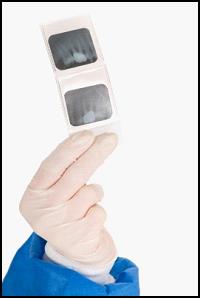
Ideally you should be visiting your dentist and oral hygienist at least once a year; twice is better. During your routine checkup, your dentist will inspect your teeth and gums for signs of tooth decay, gum disease and other oral health problems. If any of these problems are present, your dentist will recommend the appropriate course of treatment for your specific situation.
Routine checkups also include a professional teeth cleaning. During this procedure, your oral hygienist will clean your teeth using a small metal tool that will scrape away tartar (a hard mineral build-up) from the crowns of your teeth and just beneath the gum line. After this step your oral hygienist will floss, polish and coat your teeth using fluoride.
Routine Checkups: Getting a Closer Look
In order to get a greater sense of the state of your teeth and gums, modern dentistry makes use of incredible technology that enable healthcare professionals to detect problems at beneath the gum line. All-On-Four dental implants specialists in Chicago say that your annual check-up should include X-rays, which allow your dentist to inspect the health of your tooth roots and jawbone. This will help him/her to determine any signs of infection or decay that aren't visible to the naked eye.
Your dentist may also recommend placing protective sealant on the chewing surface on the back teeth in order to prevent them from developing cavities. Sealants help to guard your teeth from food debris and prevent bacteria from getting stuck in the deep grooves and cusps of the teeth, especially the molars.
Routine Checkups: Finishing Touches

During your routine checkup, your dentist may apply a fluoride solution directly to your teeth in order to keep them strong and cavity-resistant. It is very important that you disclose your medical history and existing conditions with your dentist. Your dentist will be able to determine the safest courses of treatment for your oral health care in combination with your current general health. If you are prone to infections, it may be necessary for you to undergo a course of antibiotics before having any dental work done. Your dentist may also inquire about your diet, in order to determine whether or not you are getting enough of all the right minerals and vitamins.
If your dentist finds that you have active gum disease or tooth decay, he or she will advise you about your oral hygiene routine and what you can do in order to fight the problems. New teeth experts in Chicago advocate the daily discipline of a good oral hygiene routine coupled with regular routine checkups as the best way to maintain an excellent standard of oral health.
Thursday, May 30, 2013
New Teeth Specialists in Chicago Answer Your Questions about Oral Health and Hygiene, PART 4
Got questions about tooth whitening? Want to find out if you’re doing the best you can do to look after your teeth and gums? Your questions are all answered in this four-part FAQ guide to oral health and hygiene.
Welcome back to our four-part article series in which New Teeth specialists in Chicago answer all your frequently asked questions on oral health and hygiene. In our previous article post, we began addressing concerns that were more related to oral health problems, such as teeth replacement, cavities and why dental implants are considered to offer a better solution to missing teeth than conventional dental bridges. In this article, the final installment of the series, we’ll answer some of your final questions on oral health and hygiene maintenance.
It has been the aim of this FAQ guide to promote a greater understanding and appreciation for the importance of oral health to whole-body health.

FAQ: What’s the best way to get rid of bad breath?
Answer: Bad breath can be caused by one of three things and the way you approach treating it will depend on the underlying cause: (1) eating pungent foods such as garlic, onion and anchovy, (2) poor oral hygiene, which allows oral bacteria to flourish and (3) illness in another part of the body, especially the respiratory system.
If you absolutely need to avoid bad breath, then steer clear of pungent foods such as those mentioned above. Long-term good oral hygiene will ensure that your mouth is naturally healthy and your breath neutral. If you still struggle with halitosis, it may be possible that you have a respiratory infection or some other illness that is linked with bad breath. If your dentist can’t offer you solutions, your doctor very likely can.
Other habits to avoid if you want to keep your breath as sweet and pleasant as possible include smoking, excessive drinking and a diet that is high in sugar and starch.
FAQ: How long is it okay to wait before having a tooth replaced?
Answer: If you lose a tooth or have one accidentally knocked out, it is imperative that you seek immediate attention from a dental implants specialist in Chicago. You should not wait at all to have your mouth treated, because you leave yourself vulnerable to infection. Also, the longer you wait to have a tooth replaced, the more complex dental implant surgery becomes. The bone structure surrounding the root of the tooth becomes resorbed by the jaw, leaving less healthy bone to support an implant. For these reasons, implant dentists always urge patients to seek immediate attention in the event that one or more of their natural teeth are lost.

FAQ: Why do teeth go missing?
Answer: Teeth can go missing for a whole variety of reasons. The most common causes of tooth loss are tooth decay, periodontal (gum) disease and accidental trauma received to the face. Decay and disease are, in turn, caused by poor oral hygiene, habits such as smoking and heavy drinking, eating disorders, genetics, certain medications and illness (diabetes and cancer). Some of these factors cannot be avoided, but most of them can. Couple good oral hygiene with regular professional attention and cleanings and you should keep your pearly whites in excellent condition for life!
Tuesday, January 1, 2013
Dental Implants in Chicago: New Teeth in a Day, FACT!
This article explains how new dental implant protocols make it possible for patients to get a brand new set of teeth in as little as a single day.
If someone told you that it was possible to get a new set of teeth in a day, would you believe them? How about if that person was an expert in dental implants in Chicago? You might believe them then, but you’d definitely want to know what the catch is. The fact is, incredible advancements in dental implant hardware, surgical protocol and medical technology have made it possible for edentulous (toothless) and near-edentulous patients to get new teeth in Chicago. In a single day, no catch.
About All-on-4 Dental Implants in Chicago
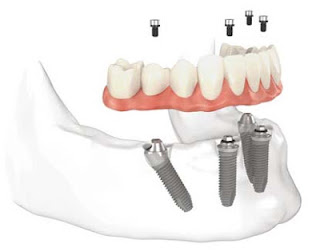
The All-on-4 dental implant protocol was developed in the early 1990’s to provide a fixed and non-removable tooth replacement solution to patients who had been wearing dentures for so long that their jaw bone had suffered substantial shrinkage. Removable dentures, which rest on the gums but don’t actually stimulate the underlying jaw bone, do not promote the health of this hard tissue, which subsequently atrophies. As a result, many of the patients who most needed new teeth in Chicago were not considered candidates for dental implants.
All on 4 dental implants changed that. The protocol consists of the placement of four dental implants in the jaw: two in the anterior (front) portion of the jaw where there exists a greater volume of atrophy-resistant bone tissue, and two longer angulated implants in the posterior (back) portion of the jaw. This angulation ensures that the dental implants are rigidly stabilized even if there isn’t a great amount of bone volume available. It also ensures that damage to vital oral structures, such as the sinus cavity in the upper jaw and the nerve canal in the lower jaw, is avoided.
This is where the name “All on 4” comes in… the specialist in dental implants in Chicago will then attach a fully customized, prosthetic dental bridge to the abutments of the dental implants, screwing it firmly in place. And there you have it! Patients are able to get beautiful, fixed new teeth in Chicago! But, this doesn’t explain how this feat can be achieved in only one day.
Same Day Dental Implants and New Teeth in Chicago

By using only four dental implants instead of six, eight or even 10, as was custom with traditional dental implants techniques, and through the careful placement and angulation of these four implants, oral surgeons are able to (1) provide sufficient support for a dental bridge even if patients have worn dentures for many years, (2) typically without the need for bone grafting surgery.
This saves patients from multiple implant surgeries and bone grafting, which requires many months of healing before the jaw bone is even ready to accept implants. With only four dental implants to place, the entire All-on-4 procedure can almost always be carried out in a single surgery, making it really possible for patients to get new, non-removable teeth in as little as a day!
All-on-4 dental implants in Chicago save patients time and money without compromising on the quality of the solutions provided.
Subscribe to:
Comments (Atom)